Desire Hydraulics is a Pune-based manufacturer of gravity die casting (GDC) machines, built at MIDC Bhosari, Pune, Maharashtra. Stationary and tilting machines are designed, machined and tested in-house, and specified around your die, alloy, casting weight and cycle time. Foundries in Bhosari, Pimpri-Chinchwad, Chikhali, Talegaon and Chakan can visit the works and go through the machine face to face. We also supply Nashik, Chhatrapati Sambhajinagar (Aurangabad), Ahmedabad, Coimbatore, Kerala and the UAE. If you are searching for a gravity die casting manufacturer in Pune, Maharashtra, first decide whether you need castings, a machine or a die, because those are three different suppliers.
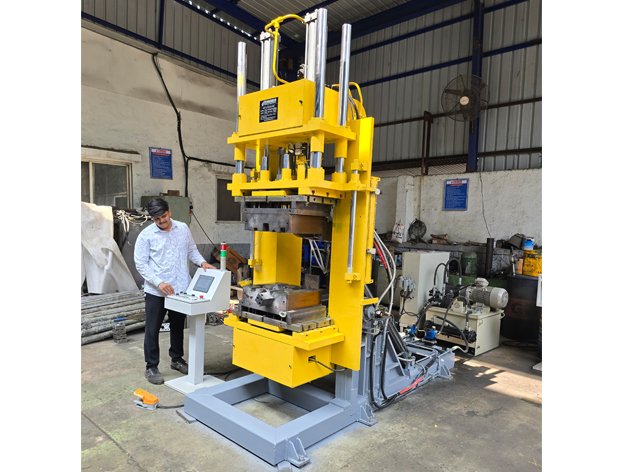
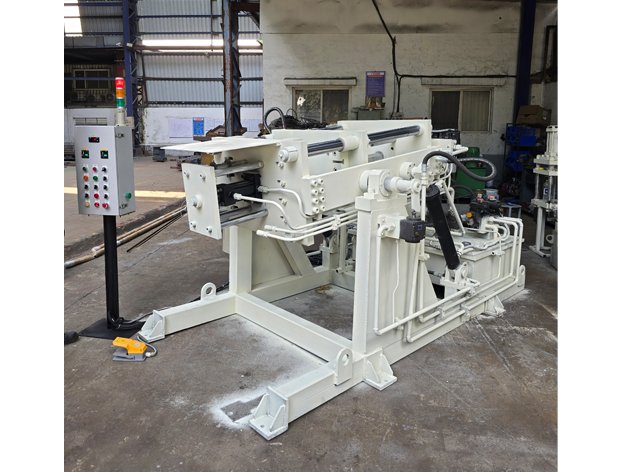
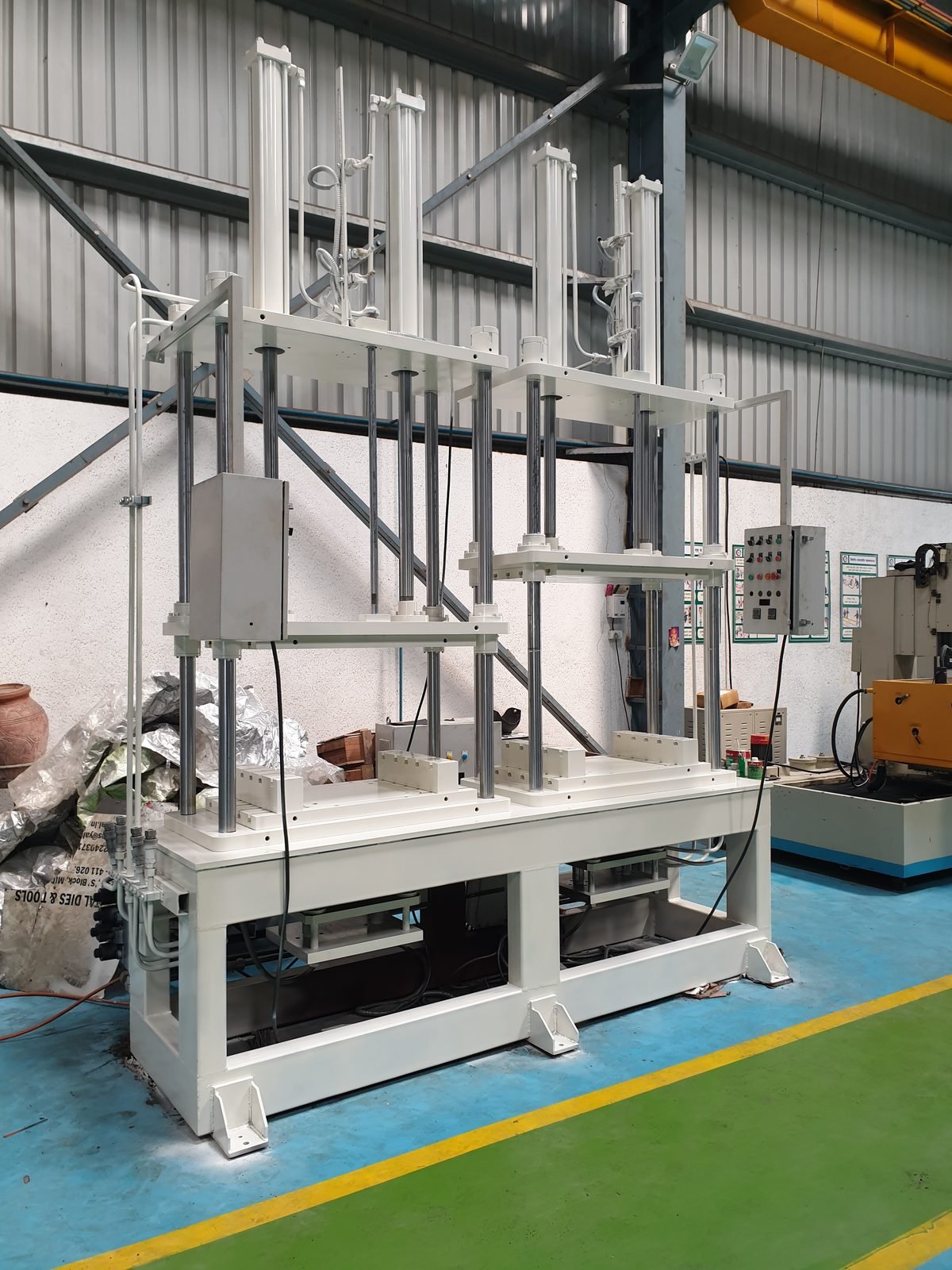
Gravity die casting machines built at our Pune works. See more machines in the gallery.
Pune is one of the few places in India where you can find the whole gravity die casting chain within an hour's drive: melting and casting foundries, tool rooms that cut the dies, and companies that build the machines the dies run on. That is good for buyers, and it is also why a search for "gravity die casting manufacturer in Pune" gives such a muddled list.
This guide is for people who need to buy or specify a GDC machine in Pune and Maharashtra. It explains who does what, how the Pune belt is laid out, what to check when you visit a builder's works, what a Maharashtra plant needs before the machine arrives, and how the same machines are supplied to Nashik, Chhatrapati Sambhajinagar, Ahmedabad, Coimbatore, Kerala and the UAE. For the basics of the process and a wider look at Indian builders, read our companion guide to gravity die casting manufacturers in India.
Desire Hydraulics at a glance
- What we make
- Gravity die casting (GDC) machines, hydraulic presses, power packs and cylinders
- Works
- Plot No. 4/9, Adhar Industrial Premises Co.op. Society, Sec 10, PCNTDA, MIDC Bhosari, Haveli, Pune, Maharashtra 411026
- GDC machine types
- Stationary and tilting machines, customised around the die and the automation level you choose
- How they are built
- Designed, machined, assembled and tested in-house at the Pune works
- Supplies
- Pune, Nashik, Chhatrapati Sambhajinagar, Ahmedabad, Coimbatore, Kerala, other Indian states and the UAE
- Orders delivered
- 5,000+ across the machine range, in India and the UAE
- Contact
- +91 75585 54709 and nitesh@desirehydraulics.com
- Best first message
- Your casting drawing and die dimensions, so the machine can be specified against the die
Gravity die casting in Pune: castings, machines or dies?
When someone types "gravity die casting manufacturers in Pune Maharashtra", they usually mean one of three things. Sending the wrong enquiry to the wrong kind of company is the commonest way to lose a week.
| You need | Who makes it | What to check |
|---|---|---|
| Aluminium castings supplied to a drawing | An aluminium GDC foundry | Melting capacity, alloys handled, die and process control, heat treatment, machining, inspection and quality certification for your industry. |
| A gravity die casting machine | A GDC machine manufacturer such as Desire Hydraulics | Whether they build it in-house, whether they review your die, the written specification, testing, service and spares. |
| A die for your casting | A tool room or die maker | Experience with permanent-mould dies, die steel, cooling and gating design, and trials on your alloy. |
| Trimming, fettling or die fitting equipment | A hydraulic press manufacturer | Bed size, tonnage and controls for your casting and die. |
Desire Hydraulics builds the machines, and the presses that sit around them. If you are setting up or expanding a GDC line in Pune, that is where we are useful. If you only need castings supplied, look for a foundry with GDC capacity in your alloy and weight range.
Why Pune foundries choose Desire Hydraulics
- The works is in Bhosari. Frame fabrication, machining, hydraulics and assembly happen at MIDC Bhosari, Pune. You can walk the shop, meet the people who will build your machine and go through the specification in person.
- Specified from your die. We ask for the die drawing first. Die mounting area, die weight, opening, tilt range, core pulls and ejection follow from that, not from a catalogue size.
- Stationary and tilting machines. Both are built here, so the recommendation depends on your casting rather than on what happens to be in stock.
- Own hydraulics. We build power packs and cylinders ourselves. On a GDC machine almost every movement is hydraulic, so the team that designs the circuit is the team that fixes it.
- Tested before it ships. Machines are tested at our works before dispatch, hydraulics included.
- Service close by. For a Pune plant, a service call is a local trip, not a courier shipment.
- The equipment around the machine. Trimming presses take gates and flash off castings, and die spotting presses help tool rooms fit dies.
- Proven volume. 5,000+ orders delivered across our machine range, in India and the UAE.
The product page has the range: GDC machine manufacturers in Pune.
The Pune gravity die casting belt
Aluminium casting in Pune follows the same geography as the city's engineering industry. Knowing it helps when you compare suppliers, plan logistics, or hunt for a tool room.
- Bhosari and Pimpri-Chinchwad: a dense engineering and auto-component area, and home to our works. Foundries, machine shops and hydraulic builders sit close together, so trials, spares and repairs are quick.
- Chikhali, Moshi and Talegaon: a long-established foundry and casting belt with a mix of small and mid-size units.
- Chakan: the automotive cluster, with vehicle plants and a deep supplier base. Demand for aluminium castings for engine, brake, transmission and structural parts is steady.
- Ranjangaon and Sanaswadi: the eastern industrial belt, with engineering, electrical and auto-component users.
- Around the city: tool rooms, heat-treatment shops, CNC machining houses and testing labs that a casting supply chain needs.
That concentration matters for a machine buyer. When a hydraulic valve, a cylinder seal or a limit switch fails, being in the same industrial belt as the builder shortens the downtime.
GDC machine types available in Pune
| Type | What it does | Choose it when |
|---|---|---|
| Stationary | The die stays in one position. It opens and closes, cores pull and the casting ejects, but the die does not rotate. | The casting fills well from a direct pour and you want a simpler machine. |
| Tilting | The die rotates through a controlled angle during the pour, so metal enters gently and fills in sequence. | The casting is deep, thin-walled or complex, and a direct pour would splash or trap gas. |
| Vertical or horizontal parting | The die parts on a vertical or horizontal plane. | The die designer has fixed the parting line. The machine follows the die. |
| Special-purpose | Additional slides, side blocks, core pulls, automatic pouring or ejection, integrated cooling and handling. | A standard layout cannot carry your die or your cycle. |
Choose tilting because your casting needs the controlled fill, not because it sounds more advanced. The types section of our India guide goes into more detail.
What a GDC machine specification must say
Two machines that look alike can differ in die space, die weight and hydraulics. On any quotation, look for these lines and make sure each has a number:
- Die mounting area and T-slot layout, with room for clamps and cooling connections.
- Maximum die weight the frame and tilt mechanism are built for.
- Die opening stroke and daylight, enough to clear the casting and its cores.
- Tilt range and speed for tilting machines, and how the speed is controlled.
- Core pulls: number, stroke and force, and whether the controller sequences them.
- Ejection: stroke and force.
- Hydraulic power pack: pressure, flow, motor power, tank size, filtration and oil cooling.
- Controls: manual, relay or PLC and HMI, with timers for cooling, dwell and cycle.
- Cooling and heating services for the die, timed to the cycle.
- Safety: guarding, two-hand controls, interlocks and emergency stops for a molten-metal area.
Gravity die casting for Pune's automotive and EV industry
Pune's vehicle plants and their suppliers are the biggest single reason GDC machines are in demand here. Typical aluminium GDC parts for the sector include brake and suspension components, cylinder heads, pistons, housings, covers, brackets and manifolds.
Electric vehicles add a second wave: motor housings, covers, mounting parts and thermal-management components. Gravity die casting is one option among several for these. Very high volume, thin-walled housings are often pressure die cast, while GDC suits heat-treatable, load-bearing or pressure-tight parts, and lower to medium volumes where die cost matters. Your casting engineer will pick the process, and we then specify the machine for the die that results.
Beyond automotive, Pune's pump, motor, electrical and machinery makers use GDC for pump bodies, motor end shields, terminal boxes, gearbox housings and agricultural parts.
How to buy a GDC machine in Pune, step by step
- Decide what you are buying. Castings, a machine or a die. This guide assumes a machine.
- Collect the die information. Casting drawing, alloy, casting weight, die dimensions and weight, parting direction, number of cavities and core details.
- Say how it should run. Stationary or tilting, quantity per shift, target cycle time and how much automation you want.
- Call or visit. Because our works is in Bhosari, most Pune buyers come to us. Bring the drawings, and the die too if it is ready.
- Get the specification in writing. Numbers for every line in the specification section above, plus testing, delivery, installation and commissioning scope.
- Compare like with like. Line up quotations on specification, fit to your die, testing and service, not only on the total.
- Prepare the site while the machine is built. Foundation, power, water, furnace position and fume extraction.
- Commission and train. Confirm who commissions, who trains your operators and what the handover looks like.
What to check when you visit a machine builder's works
A visit tells you more than a brochure. Whether you come to us or to anyone else, look at:
- How the frame is fabricated, and the weld quality on load-bearing joints.
- Whether die plates and mounting faces are machined in-house, and how flat and square they look.
- Pivot bearings, guides and tilt cylinders on a tilting machine.
- Hydraulic pipework: neat, supported, clean, with accessible filters and gauges.
- How the power pack is cooled, because foundry floors are hot.
- The control panel: tidy wiring, labelled terminals, proper guarding and emergency stops.
- Whether a machine is run under pressure before dispatch, and whether you can watch.
- The paperwork: circuit diagrams, manual and spare-parts list.
Ask to see the same things at any other builder on your shortlist. Good builders are usually happy to be compared.
Setting up a GDC machine in Maharashtra
Most delays on a new line come from the site, not the machine. Plan these before delivery:
- Foundation and floor: a level, solid floor, with the machine's load and footprint agreed in advance.
- Power: a three-phase supply sized for the power pack, furnace and cooling equipment. Confirm requirements with your electrical contractor.
- Water: supply and drain for die cooling, at the flow and quality the die needs.
- Furnace position: close enough to keep pouring short, far enough to keep heat and splash away from hydraulics.
- Fume extraction and ventilation: for the melt, coating and pouring areas.
- Monsoon: from June to September, Pune's humidity affects sand cores, die coats and the floor. Store cores dry, preheat dies fully and keep the shop free of standing water. Water meeting molten aluminium is dangerous.
- Approvals: foundries in Maharashtra generally need pollution-control consent for the furnace and its emissions, plus factory and fire safety compliance. Check current requirements with the Maharashtra Pollution Control Board, your MIDC office and your safety consultant before you commission.
Gravity die casting compared with other processes
GDC fills the die under gravity, so it gives dense, heat-treatable castings with simpler machines and lower tooling cost than pressure die casting. High pressure die casting suits very high volumes of thin, complex parts, but can limit heat treatment. Low pressure die casting gives very clean castings and suits wheels and larger parts, with a more complex machine and furnace. Sand casting suits one-offs, low volumes and very large parts. No process wins on every job, so the casting engineer chooses by volume, geometry, alloy and cost. The full comparison table is in our India guide.
What decides GDC machine price in Pune
There is no single price for a gravity die casting machine, because there is no single machine. The price moves with:
- Die mounting area and maximum die weight
- Stationary or tilting design, and the tilt range and control
- Number and force of core pulls
- Frame and structure weight
- Hydraulic power pack, cylinders, valves and cooling
- Controls: manual, relay or PLC and HMI
- Ejection and die clamping
- Automatic pouring, casting removal or extra stations
- Guarding and safety equipment
- Transport, installation and commissioning
A cheaper machine that is undersized for your die will cost more in the end, so compare on specification and fit first.
Supplying GDC machines from Pune to Dubai and the UAE
Desire Hydraulics has delivered machines in India and the UAE, and we evaluate export enquiries for GDC machines from UAE buyers. An export order asks for more paperwork and planning than a local one, so agree these points before production:
- Technical package: general arrangement drawing, foundation and load information, hydraulic circuit, electrical diagram, component list, operating manual, maintenance schedule and spare-parts list.
- Electrical match: UAE industrial supply is generally three-phase, 400 V, 50 Hz, which is close to India's, but confirm the exact voltage and frequency at your plant before the machine is built.
- Packing and shipping: export packing, lifting points, dimensions and weights, and sea shipment from the Mumbai-area ports.
- Commercial documents: commercial invoice, packing list and the shipping documents your importer needs.
- Import requirements: check UAE customs, conformity and safety requirements with your importer or the local authority.
- Installation and support: who installs, commissions and trains, and how spares reach you.
For an international enquiry, send the country and city, the electrical specification at your plant, the installation requirement and the same die details as for a local quote.
Nashik, Chhatrapati Sambhajinagar, Ahmedabad, Coimbatore, Kerala and the rest of India
The process for a machine outside Pune is the same: drawings and a call, a written specification, manufacture and testing at our works, dispatch, then installation and commissioning at your site. Transport, installation and commissioning are confirmed in the quotation.
- Nashik: engineering, auto-component and electrical units, a few hours by road from Pune.
- Chhatrapati Sambhajinagar (Aurangabad): the automotive and industrial component belt around Waluj and Chikalthana.
- Kolhapur and western Maharashtra: a long-established foundry region.
- Ahmedabad, Rajkot and Gujarat: engineering castings, pumps and machinery components, plus brass fittings around Jamnagar.
- Coimbatore, Chennai, Hosur and Tamil Nadu: pump, motor, automotive and general casting clusters.
- Kerala: engineering and fabrication units around Kochi, Thrissur and Palakkad.
- Bengaluru, Hyderabad, Delhi NCR, Faridabad and Ludhiana: quoted the same way.
Read the national view in Gravity Die Casting Manufacturers in India, or see our hydraulic press guide if your line needs presses too.
What to send for a GDC machine quotation
- Casting drawing, alloy, weight and section thickness
- Die size, weight, parting direction and number of cavities
- Core details and how they move
- Stationary or tilting, and tilt range if fixed
- Quantity per shift and target cycle time
- Automation level, and any pouring or removal automation
- Furnace type, power and water availability
- Delivery location, and for overseas enquiries the country, city and electrical specification
Use the enquiry form or call +91 75585 54709. If you do not have every detail, send what you have and our engineers will ask for the rest on a call.
Gravity die casting manufacturers in Pune, Maharashtra: frequently asked questions
Who is the top gravity die casting manufacturer in Pune, Maharashtra?
There is no official ranking, so be careful with lists that claim one. Compare builders on in-house manufacturing, a written specification against your die, testing, service and references. Desire Hydraulics builds GDC machines at MIDC Bhosari, Pune, tests them before dispatch and supplies foundries across India and the UAE, so it belongs on your shortlist.
Are gravity die casting manufacturers in Pune foundries or machine builders?
Both exist in Pune. Foundries pour aluminium castings for customers, machine builders make the GDC machines foundries use, and tool rooms make the dies. Desire Hydraulics is a machine builder.
Which is the best gravity die casting machine manufacturer in Pune?
The best builder is the one whose machine fits your die and whose service you can rely on. Visit the works, ask for a written specification, check the testing and service arrangements, and compare at least two quotations. Desire Hydraulics is at MIDC Bhosari and welcomes that comparison.
Where is Desire Hydraulics located?
Plot No. 4/9, Adhar Industrial Premises Co.op. Society, Sec 10, PCNTDA, MIDC Bhosari, Haveli, Pune, Maharashtra 411026. Call +91 75585 54709 before you visit.
Who makes GDC machines in Pune?
Several engineering and hydraulic machine makers in Bhosari, Chakan, Chikhali and nearby industrial areas build GDC machines. Desire Hydraulics builds stationary and tilting machines at MIDC Bhosari, designed around the customer's die.
What is gravity die casting?
Gravity die casting, or GDC, is a casting process in which molten metal is poured into a reusable metal die and fills the cavity under its own weight, without injection pressure. It is used mainly for aluminium parts.
What is a GDC machine?
A GDC machine holds a permanent metal die and operates it during casting. It closes and clamps the die, tilts it on a tilting machine, pulls the cores, opens the die and ejects the casting.
What is the difference between a tilting and a stationary GDC machine?
A stationary machine keeps the die in one position. A tilting machine rotates the die during the pour so the metal fills smoothly with less turbulence. Tilting suits deep or complex castings, while stationary machines are simpler and suit parts that fill well from a direct pour.
Does Desire Hydraulics make tilting GDC machines in Pune?
Yes. Both stationary and tilting GDC machines are built at the Bhosari works, specified around the customer's die, tilt range and cycle.
What is the price of a gravity die casting machine in Pune?
There is no single price. It depends on die mounting area, die weight capacity, stationary or tilting design, core pulls, hydraulics, controls, automation and installation. Send your die details for a written quotation on a specific configuration.
What information do I need to send for a GDC machine quotation?
The casting drawing, alloy and weight, die dimensions and weight, parting direction, cores, stationary or tilting requirement, quantity per shift, cycle time, automation needs, furnace and power details, and delivery location.
Can I visit the factory in Pune before ordering?
Yes. The works is at MIDC Bhosari. Call +91 75585 54709 to arrange a time, and bring the casting drawing, and the die if it is ready, so the fit and movement can be reviewed together.
Can a GDC machine be customised for my die?
Yes. Die area, die height, tilt range, core pulls, ejection, cooling circuits, controls and automation can all be specified around your die and process.
Which alloys are used in gravity die casting?
Aluminium alloys such as LM25 (AlSi7Mg), LM6 (AlSi12), LM4, LM9, LM13 and AlSi10Mg are common. Brass and other copper alloys are also gravity die cast for fittings. The alloy decides pouring temperature, die coating and cooling design.
Where can I get aluminium gravity die casting done in Pune?
Pune has aluminium gravity die casting foundries, especially around Chikhali, Bhosari, Chakan and Talegaon. Desire Hydraulics builds the machines rather than supplying castings, and can help if you are setting up or expanding your own GDC line.
Do you make GDC dies?
We build the machine. The die is normally made by a specialist die maker or tool room to your casting design, and we specify the machine from the die drawing so that it fits, moves and clamps correctly.
Is gravity die casting used in Pune's automotive industry?
Yes. Pune and Chakan have a large automotive supply base, and aluminium GDC is used for parts such as brake and suspension components, cylinder heads, pistons, housings, covers and manifolds.
Is gravity die casting suitable for EV components?
It can be, depending on the part. GDC suits heat-treatable, load-bearing or pressure-tight aluminium parts and lower to medium volumes. Very high volume, thin-walled EV housings are often pressure die cast. The casting engineer chooses the process.
What is the difference between GDC and HPDC?
In GDC metal fills the die under gravity. In high pressure die casting it is injected at high pressure and speed. HPDC suits very high volumes and thin, complex parts, while GDC gives denser, heat-treatable castings with simpler machines and lower tooling cost.
What is the difference between gravity die casting and sand casting?
GDC uses a reusable metal die and gives better repeatability and surface finish for recurring parts. Sand casting uses a disposable sand mould and suits one-offs, low volumes and very large or unusual parts.
What is the difference between gravity die casting and permanent mould casting?
In practice they mean the same thing: casting into a reusable metal mould under gravity. Gravity die casting is the more common term in India.
What are the advantages of gravity die casting?
Reusable dies, repeatable dimensions, good surface finish, dense and heat-treatable castings, simpler machines than pressure casting and lower tooling cost than HPDC.
What are the limitations of gravity die casting?
Dies wear and cost money, very thin or highly complex sections may suit HPDC better, cycle time depends on solidification, and quality depends on gating, venting and thermal control.
What is the cycle time of gravity die casting?
It ranges from under a minute for small parts to several minutes for heavy castings. Section thickness and die cooling set the time more than the machine does.
How long does a gravity die last?
It depends on alloy, part geometry, die material, cooling, coating and maintenance. Aluminium dies commonly run for many thousands of shots, and careful thermal control extends the life.
Does a GDC machine need a furnace?
The process needs molten metal from a furnace, normally a separate unit placed near the machine. Furnace type and position are discussed during machine specification.
Can a gravity die casting machine be automatic?
Yes. A PLC can sequence die closing, tilting, core pulls, cooling timers and ejection, and automatic pouring and casting removal can take out manual steps. Volume and cycle requirements decide the level of automation.
How do I choose between manual, semi-automatic and automatic GDC?
Start from volume and repeatability. Manual machines suit low volumes and simple parts. PLC-controlled machines give repeatable cycles across shifts. Automatic pouring and removal suit high volumes and consistent quality demands.
Can gravity die cast parts be machined and heat treated?
Yes. GDC castings are commonly heat treated, for example LM25 castings are often T6 treated, and then CNC machined where the design needs it.
What safety features should a GDC machine have?
Guarding, two-hand controls, interlocks and emergency stops, with hydraulic hoses shielded and routed away from splash. The area must be kept dry, because water meeting molten aluminium is dangerous.
What power supply does a GDC machine need?
A three-phase industrial supply sized for the hydraulic power pack and auxiliary equipment. The exact requirement is stated in the machine specification, and it should be confirmed with your electrical contractor before delivery.
Do I need pollution-control approval to run a gravity die casting unit in Maharashtra?
Foundries and casting units generally need consent for the furnace and its emissions, plus factory and fire safety compliance. Requirements change, so confirm current rules with the Maharashtra Pollution Control Board and your safety consultant.
Is installation and commissioning available?
Yes. Transport, installation and commissioning are confirmed in the quotation, so check the scope and cost before ordering.
What after-sales support is available in Pune?
The works is at MIDC Bhosari, so service visits to Pune plants are a local trip. Spares, hydraulic repairs and support terms are stated in the quotation.
What maintenance does a GDC machine need?
Keep hydraulic oil clean, cool and at level, change filters on schedule, and check hoses, seals and fittings for leaks and heat damage. Inspect die guides, pivots, clamps, core pulls, ejectors, cooling circuits, sensors and safety devices. Follow the schedule supplied with the machine.
How long does delivery take?
It depends on machine size, die requirements and customisation. The delivery schedule is stated in the quotation, so confirm it before ordering.
Does Desire Hydraulics supply GDC machines to Nashik, Chhatrapati Sambhajinagar, Ahmedabad, Coimbatore and Kerala?
Yes. Desire Hydraulics quotes and supplies across Maharashtra and to other Indian states, including these regions, and also supplies the UAE. Transport, installation and commissioning are confirmed in the quotation.
Can a GDC machine be exported from Pune to Dubai or the UAE?
Yes. Desire Hydraulics has delivered machines in the UAE and evaluates export enquiries. The project must address the technical documentation, electrical specification, shipping, import requirements and installation.
What documents are needed to export a GDC machine?
A technical package with drawings, hydraulic and electrical diagrams, manual and spare-parts list, plus commercial invoice, packing list and shipping documents. Confirm the exact documents with your importer and the destination authorities.
Do you also make trimming presses and power packs for a GDC line?
Yes. Desire Hydraulics also builds trimming presses, die spotting presses, hydraulic power packs and cylinders, so related equipment for a casting line can come from the same works.