Desire Hydraulics builds gravity die casting (GDC) machines at MIDC Bhosari, Pune, and supplies foundries and casting units across India, including Pune, Nashik, Chhatrapati Sambhajinagar (Aurangabad), Ahmedabad, Coimbatore and Kerala. Each machine is designed, machined and pressure-tested in-house and specified around your die, alloy, casting weight and cycle time, not picked from a fixed catalogue size. Tilting and stationary machines are both built, with the hydraulics, cores, ejection and controls matched to the job. If you are shortlisting gravity die casting manufacturers in India to buy a machine, this guide tells you what to compare and what to send for a quotation.
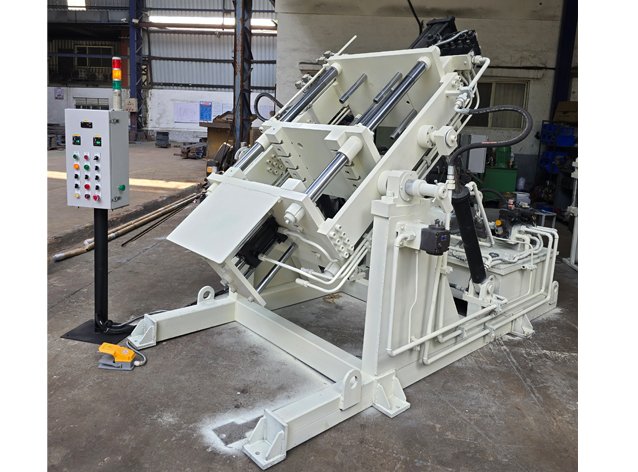
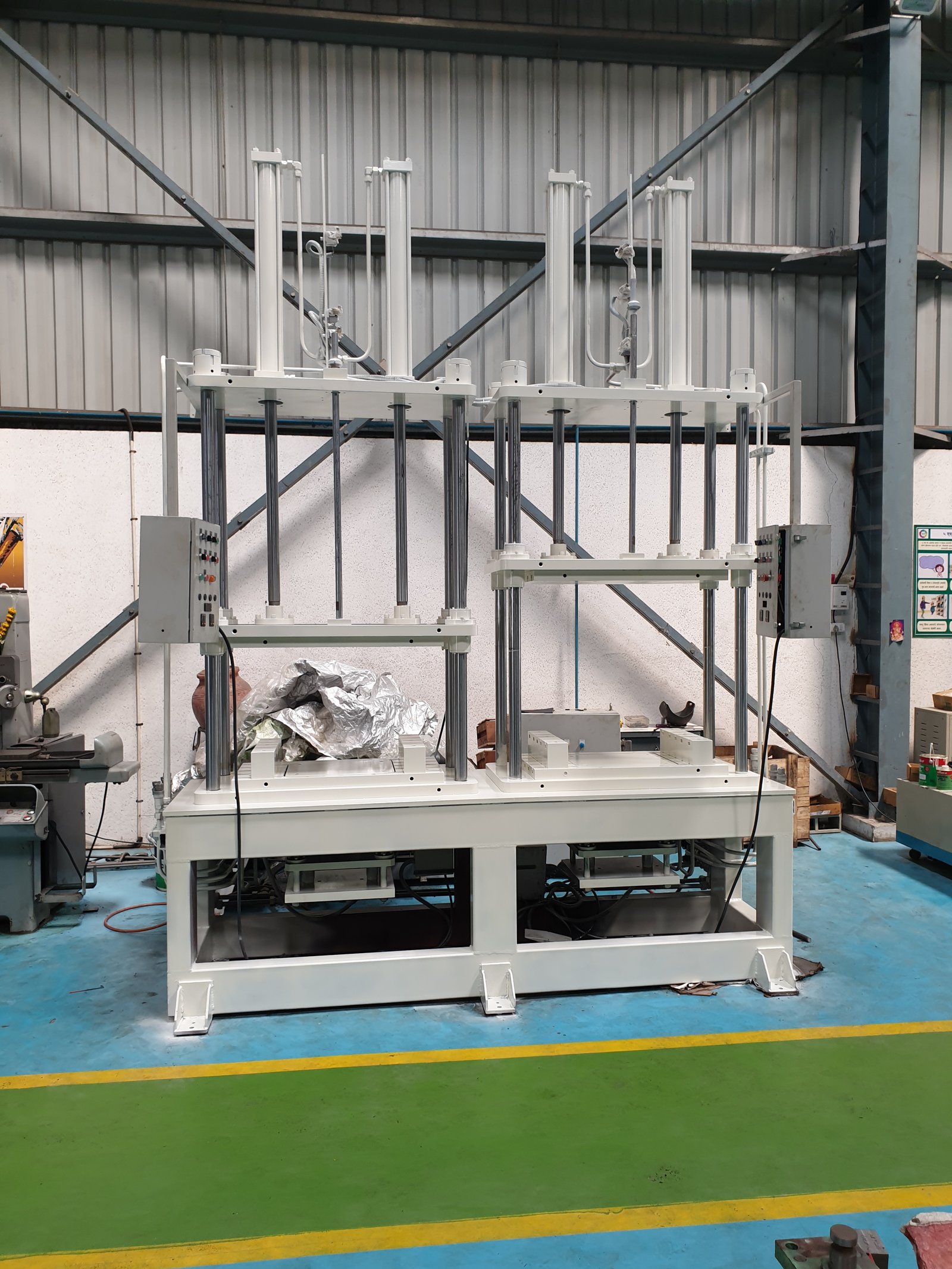
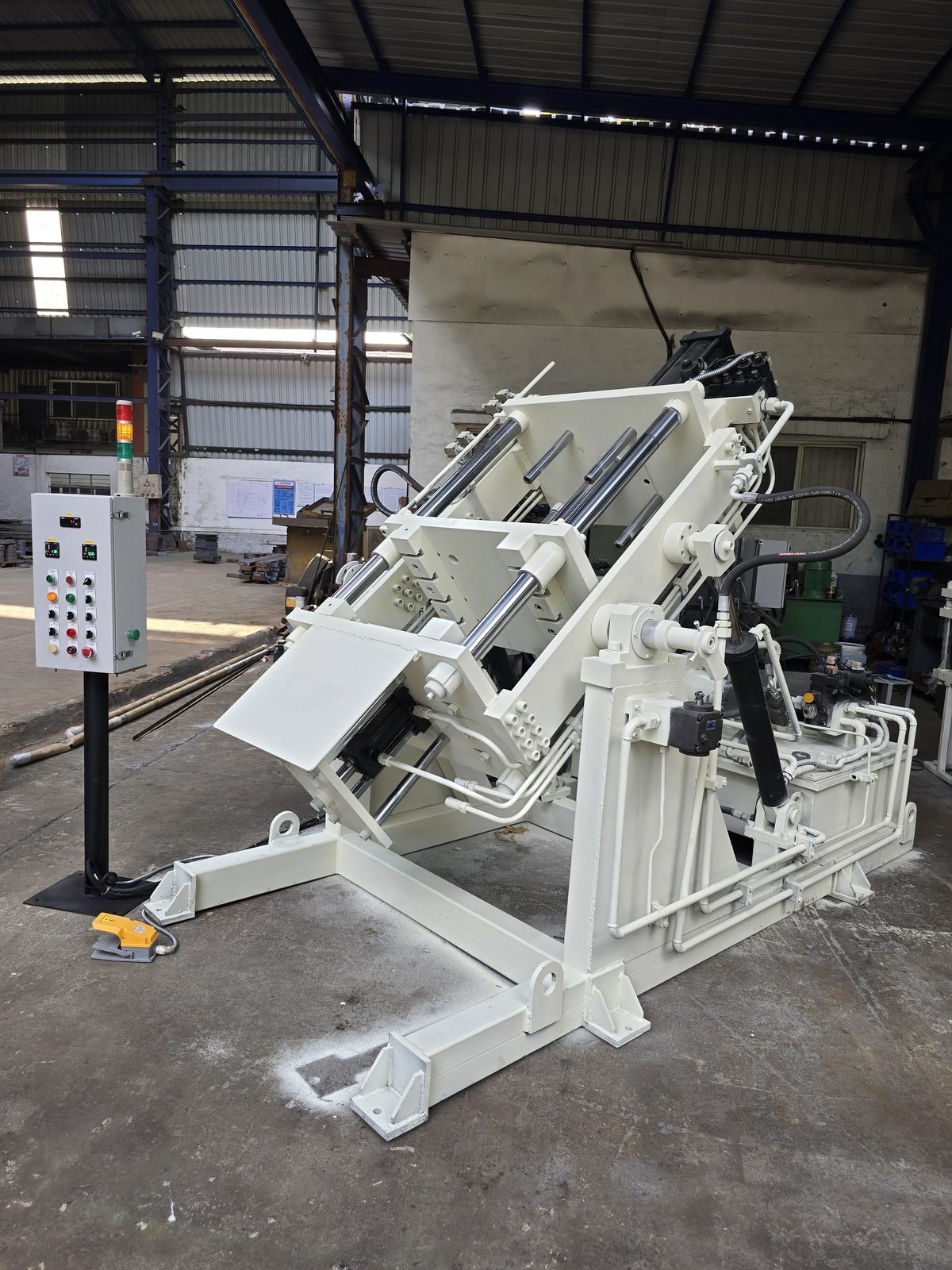
Gravity die casting machines built at our Pune works. See more machines in the gallery.
Search for "gravity die casting manufacturer in India" and you will get a mixed bag: foundries that cast aluminium parts, trading firms, and companies that actually build the machines. They are very different businesses, and mixing them up is the fastest way to waste a month of enquiries.
This guide is written for the buyer who needs a machine. It covers how a GDC machine works, which type suits which casting, what the specification really needs to say, what pushes the price up or down, and how to compare builders without leaning on a "top 10" list that nobody can verify.
Gravity die casting manufacturer: foundry or machine builder?
Two kinds of company are called a gravity die casting manufacturer in India.
- Casting manufacturers (foundries). They pour aluminium, and sometimes brass, into permanent steel dies and sell you the finished or semi-finished casting. You go to them when you need parts.
- GDC machine manufacturers. They build the machine that carries the die, closes and clamps it, tilts it during the pour, pulls the cores and ejects the casting. Foundries go to them when they need capacity.
Desire Hydraulics is a machine manufacturer. We build the equipment. If you are setting up a new GDC line, adding a station, or replacing an old manual machine, that is where we help. If you only need castings supplied, look for a foundry with GDC capacity for your alloy and weight range.
Why foundries choose Desire Hydraulics for GDC machines
- Built in-house at MIDC Bhosari, Pune. Frame fabrication, machining, hydraulics and assembly happen at our works, so you deal with the people who build the machine. Bring your die and go through the specification in person.
- Tested before dispatch. Machines are tested at our works before they ship, hydraulics included.
- Specified around your die. Die mounting size, die weight, tilt range, core pulls, ejection and automation are matched to your tooling and cycle. We ask for the die drawing before we quote.
- Own hydraulics. We build power packs and cylinders as well, so the circuit that moves your die is engineered by the same team as the frame.
- The rest of the shop under one roof. Castings still need gates and flash removed, and dies still need fitting. Our trimming presses and die spotting presses cover both.
- Proven volume. 5,000+ orders delivered across our machine range, in India and the UAE.
See the GDC machine range for the product page, or read on for the buying detail.
What is gravity die casting?
Gravity die casting, or GDC, is a casting process in which molten metal is poured into a reusable metal die and fills the cavity under its own weight. No injection pressure is used. It is also called permanent mould casting, and in the trade people simply say "GDC" or "gravity casting".
Because the metal enters the die gently and solidifies against steel, GDC castings are denser and stronger than sand castings of the same alloy, and they can usually be heat treated, which pressure die castings often cannot. That combination is why GDC is so common for pistons, cylinder heads, brake and suspension parts, pump bodies and other parts that carry load or hold pressure.
How a gravity die casting cycle runs
- Die preheat. The die is brought up to working temperature with burners or heaters. A cold die gives misruns and cold shuts, which is why the first few shots of a shift are often scrap.
- Coating. A refractory coat and release agent are applied to the cavity and runner. The coat controls how the metal flows and how quickly it cools, so it is a process variable, not just a lubricant.
- Core setting and closing. Sand or metal cores are placed, the die halves close and the machine clamps them.
- Pouring. Metal is ladled into the pouring cup, by hand or by an automatic ladle. On a tilting machine the die starts near horizontal and rotates upright as the metal flows in.
- Solidification. Water or air cooling channels in the die set the cooling pattern. Directional solidification, with thick sections cooling last and fed from a riser, is what prevents shrinkage.
- Opening and ejection. Side cores pull first, the die opens, and the ejector pins push the casting free.
- Removal and finishing. The casting is lifted out, then trimmed, and where needed heat treated, machined, leak tested and inspected.
Cycle time runs from under a minute for small parts to several minutes for heavy ones, and it is set mostly by casting section thickness and die cooling, not by the machine. A good machine holds that cycle steadily, shot after shot.
Types of gravity die casting machines
| Type | How it works | Choose it when |
|---|---|---|
| Stationary | The die stays in one position. It opens and closes, cores pull and the casting ejects, but the die does not rotate. | The casting fills well from a straightforward pour, sections are moderate and you want a simpler, lower-cost machine. |
| Tilting | The die pivots near the pouring cup so metal runs in smoothly as the die rotates upright, with tilt speed controlled. | The casting has deep pockets, thin walls or a shape where a top pour would splash, entrain oxide or trap gas. Common for cylinder heads, housings and complex parts. |
| Vertical or horizontal die parting | The die parts on a vertical or horizontal plane depending on the casting design. | The die designer has chosen the parting line. The machine follows the die, never the other way round. |
| Semi-automatic and automatic | Die movement, cores, cooling timers and ejection run from a PLC. Automatic ladles or pick-and-place arms take out the manual steps. | You need repeatable cycles across shifts and less dependence on operator skill. |
| Multi-station | Several die stations share one furnace and one operator route. | Volume is high enough that one station leaves the furnace and operator idle. |
Do not choose tilting because it sounds more advanced. Choose it because your casting needs the controlled fill, and check that the tilt range and speed suit your die.
GDC machine specifications that matter
There is no standard GDC machine size. Two machines that look the same can differ in die space, die weight and hydraulics. These are the lines to check on any quotation.
- Die mounting area: the platen size and T-slot layout must fit your die with room for clamps, cooling connections and services.
- Maximum die weight: the frame, pivot and tilt cylinders are sized for this. Undersizing it is the most common and most expensive mistake.
- Die opening stroke and daylight: enough opening to clear the casting and any cores, and to let the operator or arm remove it.
- Tilt angle and tilt speed: for tilting machines. Ask for the range, whether speed can vary through the tilt, and how it is controlled.
- Core pulls: the number of side and bottom cylinders, their stroke and pulling force, and whether they are sequenced by the PLC.
- Ejection: ejector stroke, force and whether it is timed with opening.
- Clamping: how the die halves are held shut against the metal, and how quickly they release.
- Hydraulic power pack: pressure, flow, motor power, tank size, filtration and cooling. A foundry is hot, so oil temperature control is not optional.
- Controls: manual levers, relay logic or PLC and HMI, with timers for cooling, dwell and cycle, and recipes for different dies.
- Cooling and heating services: water or air circuits with solenoid valves timed to the cycle, and burner or heater provision for preheat.
- Safety: guards, two-hand controls, interlocks and emergency stops suited to a molten-metal area.
How to choose the right GDC machine
Work from the die, not the catalogue.
- Send the casting drawing with alloy, weight and section thickness.
- Send the die drawing or dimensions: length, width, height, weight, number of cavities and parting direction.
- List the cores and how they move: side cores, bottom cores or loose sand cores.
- Say whether the pour is a straight pour or needs tilting, and if the die designer has fixed a tilt range.
- Give the quantity per shift and the target cycle time.
- Pick the automation level: manual, semi-automatic with PLC, or automatic with ladle and removal arm.
- Check the furnace type and position, water supply, power, compressed air, fume extraction and floor space.
Alloys used in gravity die casting
Aluminium is the main GDC material in India. Grades you will see in enquiries include:
- LM25 (AlSi7Mg, close to A356): the workhorse for strong, heat-treatable parts such as wheels, housings and structural components.
- LM6 (AlSi12): excellent fluidity and corrosion resistance, used for thin or intricate sections and marine or food-contact parts.
- LM4 and LM13: used where machinability, wear or piston performance matter, including piston and engine work.
- LM9 and AlSi10Mg: good strength with good casting behaviour for general engineering parts.
- Brass and other copper alloys: gravity die cast for taps, valves and sanitary fittings, using dies and machines specified for the higher pouring temperature.
The alloy changes the pouring temperature, the die coating, the cooling design and how hard the die is worked, so it belongs on the first page of your brief. Aluminium is commonly poured in the region of 680 to 740 °C depending on alloy and section, but your foundry's process sheet is what counts.
Applications of gravity die casting
- Automotive and two-wheeler: cylinder heads, pistons, brake and suspension parts, intake manifolds, wheel hubs, engine covers and housings.
- Pumps and valves: pump bodies, impellers, covers and valve bodies where pressure tightness matters.
- Electrical: motor end shields, terminal boxes, lighting housings and heat-dissipating parts.
- Agricultural and general engineering: gearbox and clutch housings, brackets, covers and machine parts.
- Sanitary and plumbing: brass taps, valves and fittings.
- Cookware and consumer products: aluminium cookware bodies and hardware.
GDC vs HPDC vs LPDC vs sand casting
| Process | How metal fills | Best for | Watch out for |
|---|---|---|---|
| Gravity die casting (GDC) | Under gravity into a steel die | Medium to high volume, heat-treatable, load-bearing or pressure-tight parts, moderate complexity | Slower cycles than HPDC and limited very thin walls |
| High pressure die casting (HPDC) | Injected at high pressure and speed | Very high volume, thin-walled and complex parts | Costly tooling and machines, and porosity that limits heat treatment |
| Low pressure die casting (LPDC) | Pushed up into the die from a sealed furnace under low pressure | Clean, dense castings such as wheels and larger structural parts | Machine and furnace are integrated and costlier |
| Sand casting | Poured into a sand mould | One-offs, low volume, very large or unusual parts | Rougher finish, wider tolerances and slower per part |
No process wins on every part. A casting engineer picks between them by volume, geometry, alloy, mechanical requirement and tooling cost. GDC is often the sensible middle: better properties than HPDC, better repeatability than sand, and far simpler machines than either HPDC or LPDC.
Advantages and limitations of GDC
Advantages
- Reusable steel dies give repeatable dimensions and a better surface than sand casting.
- Fine grain from fast cooling against steel gives good strength, and the castings respond to heat treatment.
- Simpler and cheaper machines than pressure casting, with lower tooling cost than HPDC.
- Flexible in size: from small parts of a few hundred grams to heavy castings, subject to die and machine.
- Tilting machines give a calm, controlled fill for difficult shapes.
Limitations
- Dies cost money, and they wear from thermal cycling.
- Very thin or extremely complex sections may suit HPDC better.
- Quality depends on gating, venting and thermal control, and skilled operators or good automation.
- Cycle time is limited by how quickly the casting can solidify.
Common GDC defects and what the machine can do about them
Most casting defects come from the process, but the machine is part of it. Here is where each defect usually starts.
- Gas porosity: trapped air, damp cores or a wet coat, poor venting or turbulent pouring. A tilting machine with a controlled tilt speed reduces turbulence.
- Cold shuts and misruns: die or metal too cold, slow pouring or a badly vented cavity. Consistent die temperature and pour timing help.
- Shrinkage: poor feeding or the wrong cooling sequence. Timed cooling circuits and repeatable die closing support it.
- Inclusions and oxide films: dirty melt or a splashing pour.
- Die soldering and cracking: die too hot in one zone, worn coating or poor die alignment.
- Dimensional variation: die not seating the same way each shot, worn guides or inconsistent clamping. Machine rigidity and clamping repeatability matter here.
A machine cannot fix a poor gating design or a dirty melt. What it can do is remove variation: the same tilt profile, the same timing and the same clamping on every cycle.
Customised and automated GDC machines
Standard layouts work when your die fits them. When it does not, the machine can be built around the tooling. Common additions include:
- Larger platen or extra die height for big dies
- Additional core-pull cylinders and a sequence for complex cores
- Variable tilt speed and set tilt profiles
- PLC and HMI with saved recipes for changing dies
- Timed water and air cooling circuits
- Hydraulic ejection with adjustable stroke
- Automatic ladle or pouring arm, and casting removal arm
- Heat shields and protected hoses for a hot working area
- Guards, light curtains and two-hand controls
Treat the machine as part of a production cell. It works with the die, furnace, melt handling, trimming and inspection, and the cycle is only as good as the weakest part of that chain.
GDC machine manufacturers in Pune and across India
Pune's automotive and engineering belt around Bhosari, Pimpri-Chinchwad, Chakan, Talegaon and Ranjangaon is one of India's biggest users of aluminium castings, and we are at MIDC Bhosari, so die trials, site visits and service are straightforward. Outside Pune the process is the same: drawings and a call, a written specification, manufacture and testing at our works, dispatch, then installation and commissioning at your site.
- Pune: automotive and two-wheeler component casters, engineering foundries and pump makers, all a short drive from our works. See our guide to gravity die casting manufacturers in Pune, Maharashtra.
- Nashik: engineering, auto-component and electrical units, a few hours by road from Pune.
- Chhatrapati Sambhajinagar (Aurangabad): the Waluj and Chikalthana automotive and industrial component belt.
- Kolhapur and western Maharashtra: a long-established foundry region.
- Ahmedabad, Rajkot and Gujarat: engineering castings, pump and machinery components, with brass fittings work in and around Jamnagar.
- Coimbatore, Chennai, Hosur and Tamil Nadu: pump, motor, automotive and general casting clusters.
- Kerala: engineering and fabrication units around Kochi, Thrissur and Palakkad, where we confirm delivery and commissioning scope in the quotation.
- Bengaluru, Belagavi and Karnataka; Hyderabad and Telangana: machine-tool, automotive and general engineering foundries.
- Delhi NCR, Faridabad, Ludhiana and northern India: auto-component, cycle and engineering casters.
- UAE: we supply here too.
How to compare gravity die casting manufacturers in India
There is no official ranking of the top gravity die casting manufacturers in India, and a list that claims one deserves suspicion. A better way is to compare shortlisted builders on the same points:
- Who actually builds it. Ask where the frame is fabricated, where it is machined and where the hydraulics are assembled. Visit the works if you can.
- Whether they ask for your die. A builder who quotes a machine without seeing your die drawing is guessing.
- Written specification. Die area, die weight, opening, tilt range and speed, core pulls, ejection, power pack and controls should all be numbers on paper.
- Testing. Ask what is tested before dispatch and whether you can witness it.
- Hydraulics know-how. A GDC machine is mostly hydraulic motion, and a builder that designs its own circuits can also fix them.
- Service and spares. Ask about response time, spare parts and who visits.
- Commissioning and training. Confirm scope and cost in the quotation.
- References. Ask for foundries running similar machines and speak to their maintenance teams.
Desire Hydraulics is happy to be measured against that list. We build in-house, quote against your die, and put the specification, testing, delivery and commissioning scope in writing. Send us your die details and we will come back with a recommended configuration.
What decides GDC machine price in India
Anyone quoting one price for "a GDC machine" is quoting for a machine that does not exist. The price depends on:
- Die mounting area and maximum die weight
- Stationary or tilting, and the tilt range and control
- Number and force of core pulls
- Frame and structure weight
- Hydraulic power pack, cylinders, valves and cooling
- Controls: manual, relay or PLC and HMI
- Ejection system and die clamping
- Automatic ladle, casting removal arm or extra stations
- Guards and safety equipment
- Transport, installation and commissioning
Compare quotations on specification, fit to your die, testing and support together, not on the bottom-line number alone. A cheaper machine that is undersized for your die costs more in the end.
Installation, commissioning and upkeep
Before the machine arrives, plan the foundation and floor, three-phase power, cooling water supply and drain, compressed air if used, furnace location and fume extraction. Molten metal and hydraulic oil do not mix well, so keep hoses shielded and routed away from splash areas, and keep the area dry: water meeting molten aluminium is a serious hazard.
For upkeep, follow the schedule supplied with the machine and cover at least:
- Hydraulic oil level, cleanliness and temperature, with filters changed on schedule
- Hoses, fittings and cylinder seals, checked for leaks and heat damage
- Die guides, pivot bearings and clamping components, checked for wear and lubrication
- Core-pull and ejector movement and timing
- Cooling circuits, solenoid valves and flow
- Sensors, limit switches, PLC inputs, wiring and emergency-stop circuits
- Guards, interlocks and two-hand controls
What to send for a GDC machine quotation
- Casting drawing, alloy, weight and section thickness
- Die size, weight, parting direction and number of cavities
- Core details and how they move
- Stationary or tilting, and tilt range if fixed
- Quantity per shift and target cycle time
- Automation level and any pouring or removal automation
- Furnace type, power and water availability
- Delivery location
Use the enquiry form or call +91 75585 54709. If you do not have every detail, send what you have and our engineers will ask for the rest on a call. Also see our guide to hydraulic press manufacturers in India if your line needs presses as well.
Gravity die casting manufacturers in India: frequently asked questions
What is gravity die casting?
Gravity die casting, or GDC, is a casting process in which molten metal is poured into a reusable metal die and fills the cavity under its own weight, without injection pressure. It is also called permanent mould casting and is used mainly for aluminium parts.
What does GDC stand for?
GDC stands for gravity die casting. A GDC machine is the equipment that holds, closes, clamps, tilts and opens the die during casting.
Who is the top gravity die casting manufacturer in India?
There is no official ranking, so be careful with lists that claim one. Compare builders on in-house manufacturing, a written specification against your die, testing, service and references. Desire Hydraulics builds GDC machines at MIDC Bhosari, Pune, tests them before dispatch, and supplies foundries across India and the UAE, so it belongs on your shortlist.
Are gravity die casting manufacturers foundries or machine builders?
Both are called that. Foundries cast parts for customers, and machine builders make the GDC machines foundries use. Desire Hydraulics is a machine builder. If you need castings supplied, look for a foundry with suitable GDC capacity.
Who are the gravity die casting machine manufacturers in Pune?
Pune has several engineering and hydraulic machine makers. Desire Hydraulics is one, located at MIDC Bhosari, where GDC machines are designed, machined and pressure-tested in-house. Visit the works with your die drawing to review the specification in person.
What is a GDC machine?
A GDC machine is industrial equipment that carries a permanent metal die and operates it during gravity casting. It closes and clamps the die, tilts it on a tilting machine, pulls the cores, opens the die and ejects the casting.
How does a gravity die casting machine work?
The die is preheated, coated and closed. Molten metal is poured into it and fills under gravity, with the die tilting on a tilting machine. Once the casting has solidified, the cores pull, the die opens and the ejector pushes the casting out. On automatic machines a PLC sequences these movements and the cooling timers.
What is the difference between a tilting and a stationary GDC machine?
A stationary machine keeps the die in one position while it opens and closes. A tilting machine rotates the die during the pour so the metal fills smoothly and with less turbulence. Tilting suits deep or complex castings, while stationary machines are simpler and suit parts that fill well from a direct pour.
What is a tilting GDC machine used for?
It is used for castings where a controlled, calm fill matters, such as cylinder heads, housings and other parts with deep pockets or thin walls. Tilting reduces splashing, oxide entrainment and trapped gas.
Which alloys are used in gravity die casting?
Aluminium alloys such as LM25 (AlSi7Mg), LM6 (AlSi12), LM4, LM9, LM13 and AlSi10Mg are common. Brass and other copper alloys are also gravity die cast for fittings. The alloy decides the pouring temperature, die coating and cooling design.
What products are made by gravity die casting?
Typical products are pistons, cylinder heads, brake and suspension parts, pump bodies, motor end shields, housings, valve bodies, wheel hubs, cookware and brass fittings.
What is the difference between gravity die casting and permanent mould casting?
In practice they mean the same thing: casting into a reusable metal mould under gravity. Gravity die casting is the more common term in India.
What is the difference between GDC and HPDC?
In GDC metal fills the die under gravity. In high pressure die casting the metal is injected at high pressure and speed. HPDC suits very high volumes and thin, complex parts, while GDC gives denser, heat-treatable castings with simpler machines and lower tooling cost.
What is the difference between gravity die casting and low pressure die casting?
In low pressure die casting metal is pushed up into the die from a sealed furnace under low pressure. In GDC it is poured in from above. LPDC gives very clean castings and suits wheels and large parts, but the machine and furnace are more complex.
Is gravity die casting better than sand casting?
For repeat production, usually yes: better surface finish, tighter tolerances and stronger, denser parts. Sand casting is better for one-offs, low volume, and very large or unusual parts where a permanent die is not worth making.
Is gravity die casting cheaper than HPDC?
Tooling and machines are generally cheaper for GDC. Total cost depends on volume, cycle time and part complexity, and HPDC often wins per part at very high volume. Ask for a cost comparison on your actual part.
What are the advantages of gravity die casting?
Reusable dies, repeatable dimensions, good surface finish, dense and heat-treatable castings, simpler machines than pressure casting and lower tooling cost than HPDC.
What are the disadvantages of gravity die casting?
Dies wear and cost money, very thin or highly complex sections may suit HPDC better, cycle time depends on solidification, and quality depends on gating, venting and thermal control.
What is the price of a GDC machine in India?
There is no single price. It depends on die mounting area, die weight capacity, stationary or tilting design, number of core pulls, the hydraulic system, controls, automation and installation. Send your die details to receive a written quotation for a specific configuration.
What decides the price of a gravity die casting machine?
Die size and weight capacity, tilting mechanism, core pulls, power pack and hydraulics, PLC and HMI, ejection, automatic ladle or removal arm, safety equipment, and transport and commissioning.
What information do I need to send for a GDC machine quotation?
The casting drawing, alloy and weight, die dimensions and weight, parting direction, cores, stationary or tilting requirement, quantity per shift, cycle time, automation needs, furnace and power details, and delivery location.
How do I choose the die mounting size for a GDC machine?
Start from the actual die dimensions and weight, then allow clearance for clamps, cooling connections and services. Confirm the maximum die weight the frame and tilt mechanism are designed for. Undersizing either one is a common and costly mistake.
What tilt angle does a GDC machine need?
It depends on the die and gating design, which your die designer will fix. Ask the manufacturer for the tilt range and whether the speed can be varied through the tilt, then check both against your die.
Can a GDC machine be customised?
Yes. Die area, die height, tilt range, core pulls, ejection, cooling circuits, controls and automation can all be specified around your die and process.
Can a gravity die casting machine be fully automatic?
Yes. A PLC can sequence die closing, tilting, core pulls, cooling timers and ejection, and automatic ladles and removal arms can take out manual steps. The level of automation is decided by volume and cycle requirements.
What is the cycle time of gravity die casting?
It ranges from under a minute for small parts to several minutes for heavy castings. Section thickness and die cooling set the time more than the machine does.
How long does a gravity die last?
It varies a lot with alloy, part geometry, die material, cooling, coating and maintenance. Aluminium dies commonly run for many thousands of shots. Care of the die and stable thermal control extend it.
What are the common defects in gravity die casting?
Gas porosity, cold shuts, misruns, shrinkage, inclusions, die soldering, cracks and dimensional variation. They usually trace back to melt quality, temperature, gating, venting, coating or cooling, and a machine that repeats each cycle helps reduce variation.
Does a GDC machine need a furnace?
The casting process needs molten metal from a furnace, which is normally a separate unit placed near the machine. Furnace type and position are discussed during machine specification.
Is gravity die casting suitable for mass production?
It suits medium to high volume repeat production. For very high volumes of thin, complex parts, HPDC or multi-station GDC lines may be considered.
What is the maximum casting weight in GDC?
There is no universal limit. It depends on the die, the alloy, the machine's die weight capacity and your melting and handling arrangements.
Can brass be cast by gravity die casting?
Yes. Brass taps, valves and sanitary fittings are commonly gravity die cast. The die, coating and machine must be specified for the higher pouring temperature.
What maintenance does a GDC machine need?
Keep hydraulic oil clean, cool and at level, change filters on schedule, and check hoses, seals and fittings for leaks and heat damage. Inspect die guides, pivots, clamps, core pulls, ejectors, cooling circuits, sensors and safety devices. Follow the schedule supplied with the machine.
Does Desire Hydraulics supply GDC machines to Nashik, Chhatrapati Sambhajinagar, Ahmedabad, Coimbatore and Kerala?
Yes. Desire Hydraulics quotes and supplies across Maharashtra and to other Indian states, and also supplies the UAE. Transport, installation and commissioning are confirmed in the quotation.
How long does delivery take?
It depends on machine size, die requirements and customisation. The delivery schedule is stated in the quotation, so confirm it before ordering.
Can you supply trimming presses and power packs for a GDC line?
Yes. Desire Hydraulics also builds trimming presses, die spotting presses, hydraulic power packs and cylinders, so related equipment for a casting line can come from the same works.